English
Carbon Fiber Tube Winding Process and Technology
- Dec-11-2025
- (116) Views
Compared to commonly used metal and plastic pipes, carbon fiber tubes feature lightweight, high strength, rust resistance, corrosion resistance, low thermal expansion coefficient, and long service life. The primary molding processes for carbon fiber tubes include winding, molding, extrusion, and coiling. This article provides a detailed and specific introduction to the winding process of carbon fiber tubes
The carbon fiber winding process is a process that uses wet winding to bundle the impregnated glass fibers and directly wrap them on the core film under certain tension control. When winding, it is necessary to ensure that the carbon fiber position is stable, not slipping, and evenly and continuously covers the surface of the core film. This requires the carbon fiber to be arranged according to a certain rule, which is also known as the "winding rule". The carbon fiber starts from a certain point on the core film, wraps around the core film, and then returns to the starting point, forming a non repeating winding pattern on the core film called a marking line. Different winding rules have different winding markings. The winding pattern is determined by the relative motion relationship between the core film and the winding head. The correct design of winding line shape is an important prerequisite for ensuring the quality of carbon fiber winding products. The winding line shape of carbon fiber pipes varies depending on their usage. According to Gu, the specific winding types can be divided into three types: spiral winding, circumferential winding, and longitudinal winding. By distributing these three types of winding on different winding layers, the comprehensive tensile strength of carbon fiber pipes in both longitudinal and circumferential directions can be improved.
1. Spiral winding
When spiral winding, starting from a certain point on the core film introduced by the winding head, the winding head undergoes several back and forth motions before returning to the original starting point. It can also be said that the basic motion of spiral winding is the constant rotation of the core film around the axis, and the intermittent reciprocating motion of the winding head along the axis of the core film.
2. Circumferential wrapping
When winding, the core film rotates at a constant speed around its own axis, and the winding head moves at a constant speed along the axis direction of the core film cylinder. For each rotation of the core film, the winding head moves one width of gauze, and this cycle continues until the gauze strip is evenly distributed on the surface of the core film cylinder section. The winding angle of circumferential winding is usually between 85-90 °, and the speed ratio of the winding motion to achieve circumferential winding can be defined as the ratio of the number of revolutions of the core film per unit time to the distance traveled by the winding head.
3. Longitudinal winding
When winding longitudinally, the winding head moves uniformly in a fixed plane, and the core film rotates slowly around its own axis. For each rotation of the winding head, the core film rotates a small angle, which is reflected on the surface of the core film as the width of a gauze. The complete process of carbon fiber tube winding and forming includes the preparation of raw materials, inner lining layer forming, winding reinforcement, demolding, etc.: 1. Preparation of raw materials 2. Inner lining layer forming: First, clean the foreign objects on the surface of the steel core mold, wrap the surface of the straight pipe with a polyester film demolding machine, and apply paraffin and polyvinyl alcohol demolding machines to non straight pipe parts. 3. The winding reinforcement layer can be formed by single spiral winding or combined winding. Combination winding molding combines low helix angle and circumferential winding together. In this winding type, low helix angle winding mainly bears axial pressure, while circumferential winding must bear circumferential pressure. The winding angle and number of winding layers at this time can be designed according to the customer's design requirements.
4. Demoulding
5. Product Inspection
According to customer and usage environment requirements, routine pressure sampling tests are conducted on the pipeline, with a test pressure of 1.5 times the working pressure. Each batch of carbon fiber pipes produced in bulk must undergo lining rupture and pipeline explosion sampling tests, with test pressures of 4-5 times the working pressure, respectively.
4. Demoulding
5. Product Inspection
According to customer and usage environment requirements, routine pressure sampling tests are conducted on the pipeline, with a test pressure of 1.5 times the working pressure. Each batch of carbon fiber pipes produced in bulk must undergo lining rupture and pipeline explosion sampling tests, with test pressures of 4-5 times the working pressure, respectively.
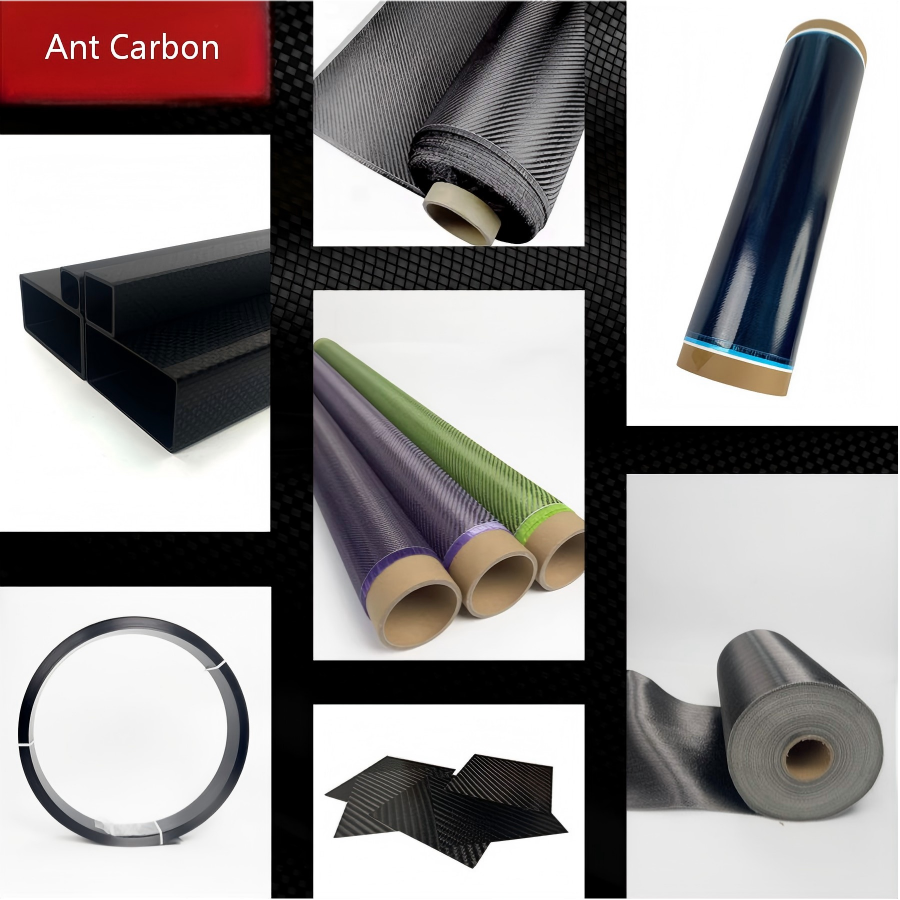
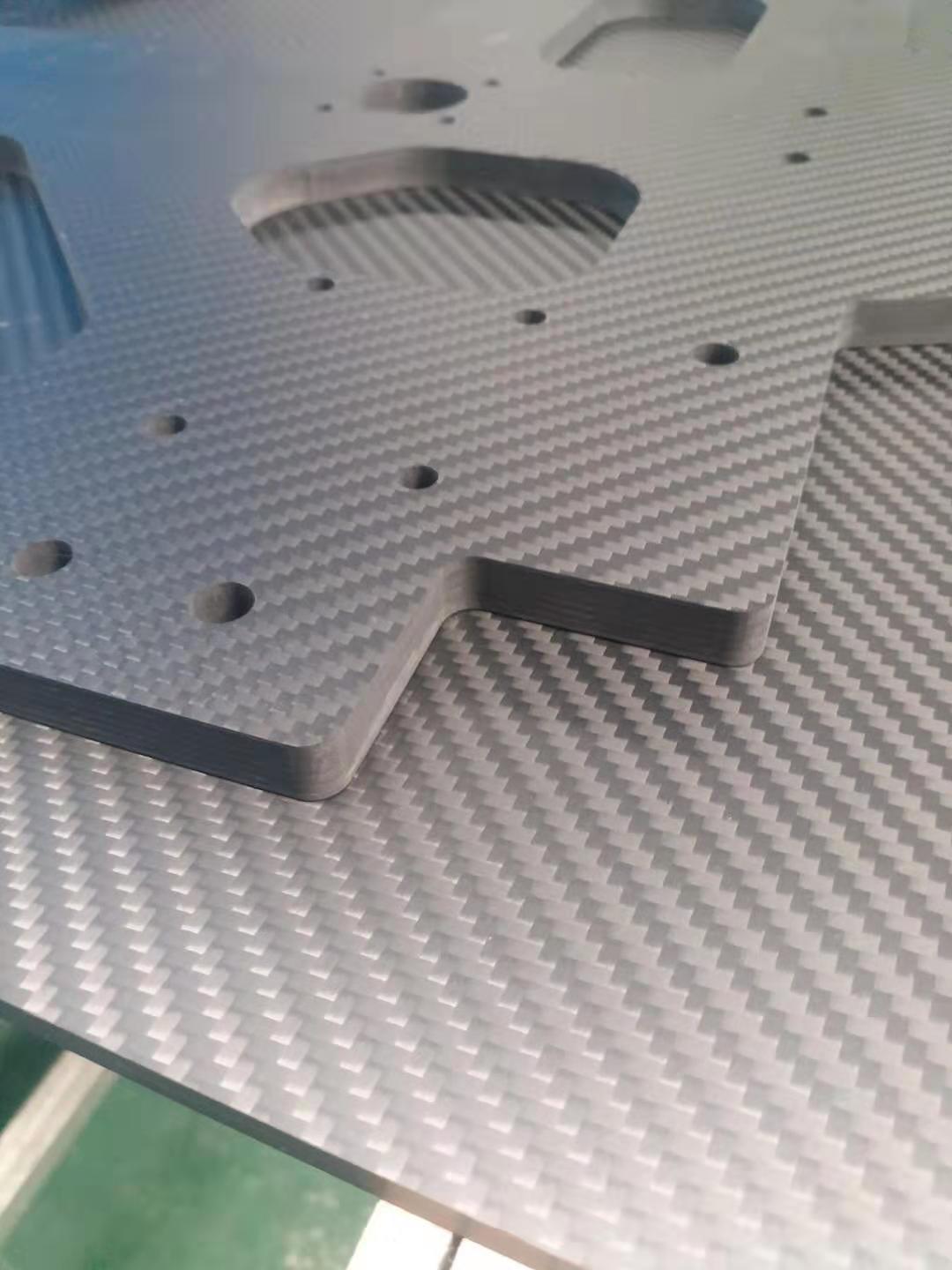
Since its establishment, Ant Carbon Company has been committed to the technological research and application development of high-performance fiber-reinforced composite materials in aerospace, rail transportation, engineering machinery, marine equipment, automotive lightweighting, medical, military and other fields. Its R&D team has decades of experience in composite material research and development. In addition, Ant carbon company is equipped with complete core production equipment for carbon fiber products, such as carbon fiber hot press forming machines, hot press tanks, curing furnaces, etc. Equipped with various CNC equipment such as milling machines, precision carving machines, drilling and tapping machines, grinding machines, etc., to meet the post-processing needs of customers for various carbon fiber products