English
Classification of carbon fiber drone frames
- Jan-15-2026
- (223) Views
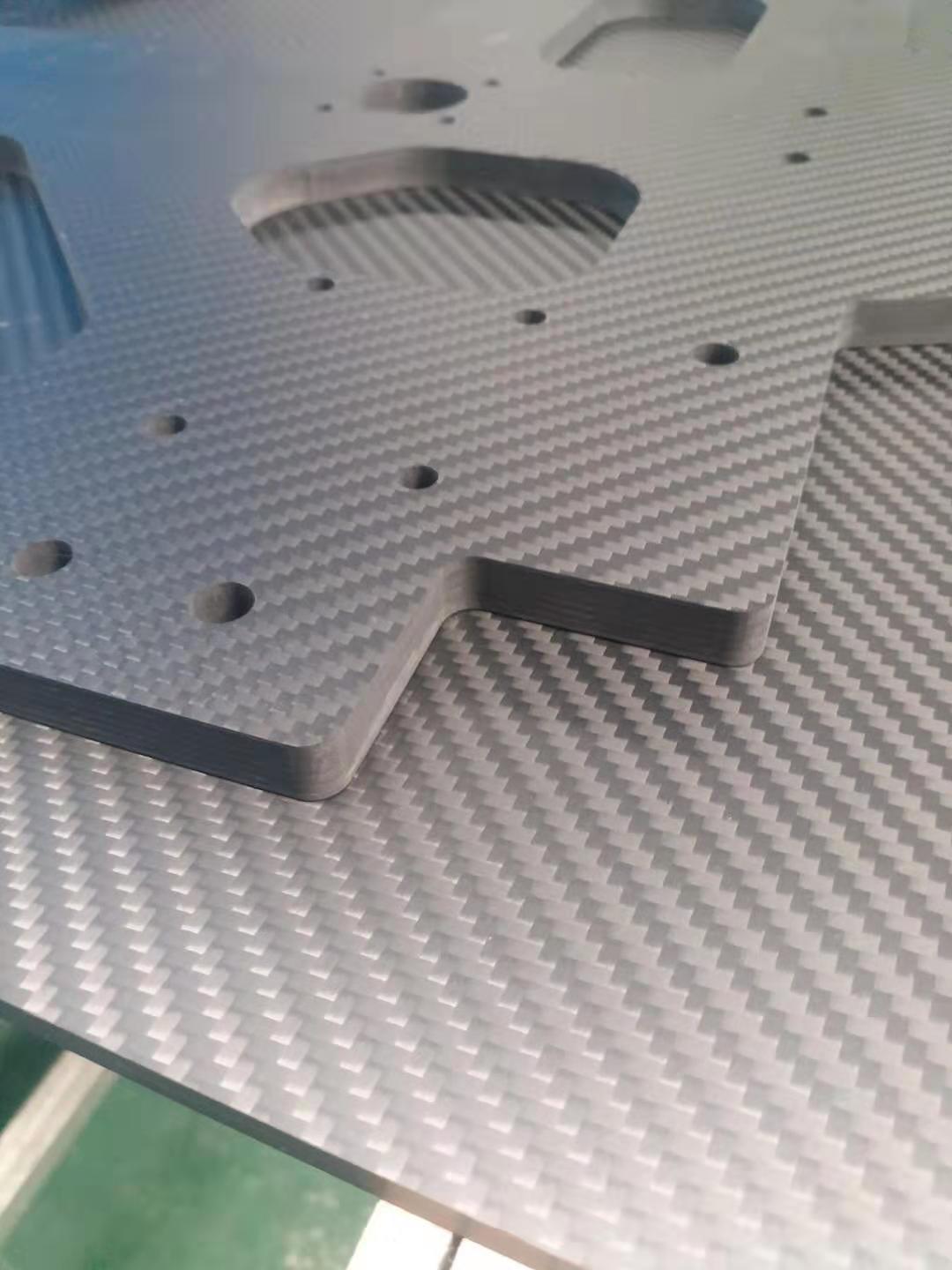
Currently, most FPV drone frames are made of carbon fiber, which offers two significant advantages: high strength and light weight. Typically, the arms of the frame are about 4mm thick to withstand the various stresses during flight; while other parts, such as the top and bottom plates, are appropriately thinner, around 1.5-2mm. This ensures the overall sturdiness of the frame while effectively reducing weight and improving flight efficiency.
(I) Classified by shape
1. X-shaped frame: This is the most common type. The True X-shaped frame is geometrically perfectly symmetrical, with equal distances from the motors to the center, but it is less commonly used in actual FPV drone designs. The Wide X-shaped frame is widely used because FPV drones need to accommodate the electronic control system in the center. This layout effectively minimizes the body size, making the aircraft more compact and agile. The Stretch X-shaped frame is a Wide X rotated by 90 degrees. It is typically used in racing scenarios, ensuring pitch stability during high-speed flight and helping pilots perform fast and precise maneuvers on the track.
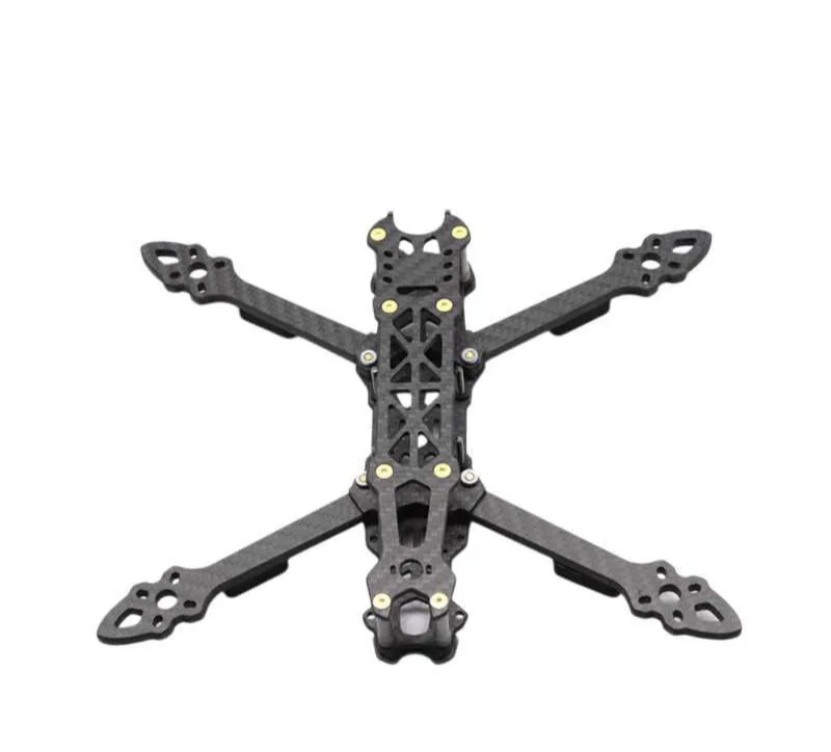
2. H-shaped frame: The arms are arranged in parallel, and the fuselage is wider. This shape provides the drone with a larger internal space, suitable for installing large equipment such as high-definition cameras. It is often used for long-distance flights and lightweight aerial photography tasks, achieving good shooting results while maintaining stability.
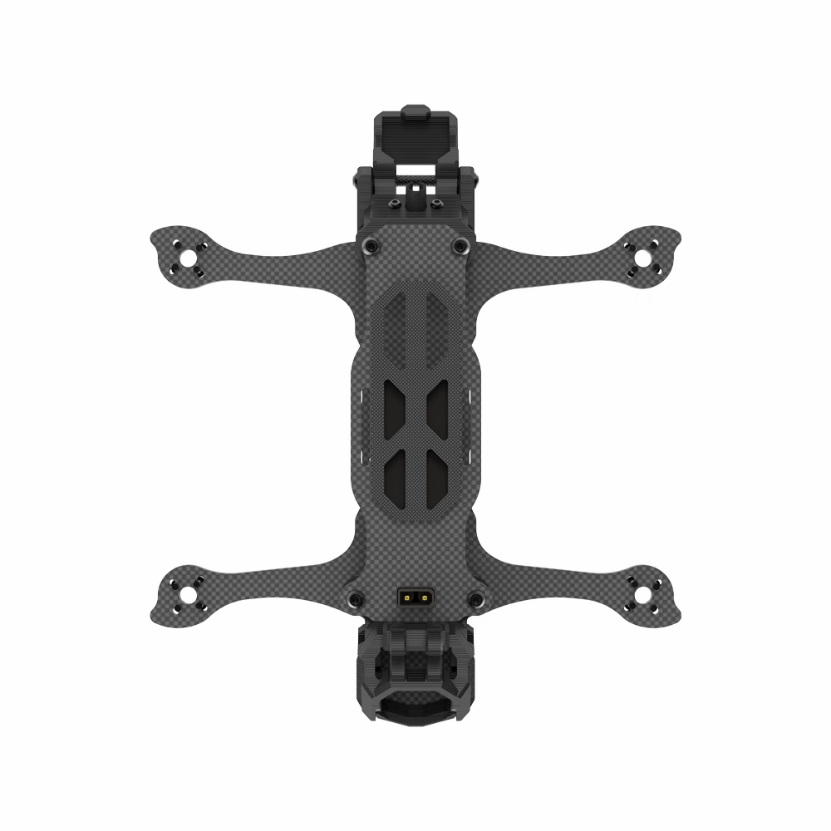
3.DC-type frame: Its front arms extend outwards, and the rear arms retract inwards, giving it an overall shape similar to a "dead cat." The biggest advantage of this frame is that the front arms and propellers do not obstruct the camera's field of view, making it ideal for aerial photography and high-definition video recording, allowing for clear, unobstructed footage.
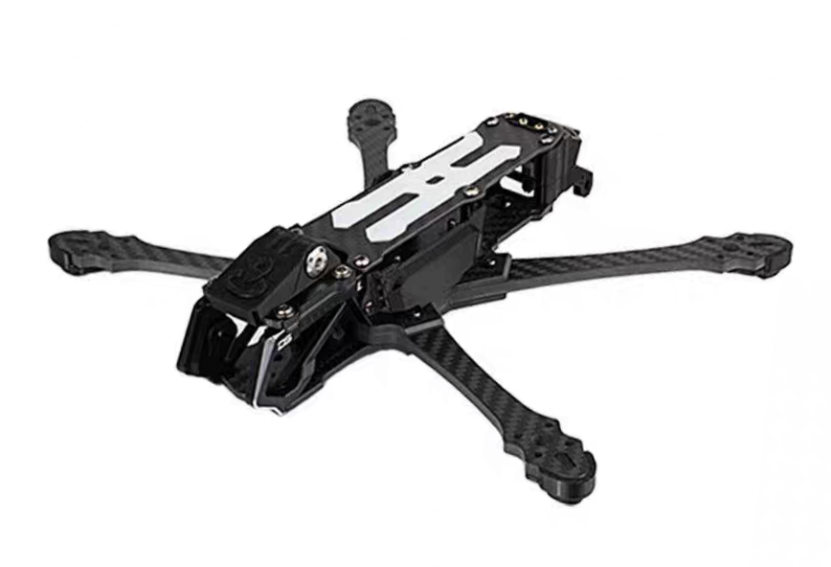
4. CineWhoop Frame: This type of frame features protective rings around the propellers, giving it a circular appearance. This design prioritizes safety and stability, preventing the propellers from injuring people or damaging objects, and also reducing noise. It is particularly suitable for indoor flight and close-range filming, making it a valuable tool for indoor film and video production.
(II) Classified by purpose
1. Racing Drone Frame: These frames are compact and extremely lightweight, with every design aspect focused on achieving speed and agility. They are often made of carbon fiber, and typically have a size of 5 inches (motor wheelbase of 200-250mm). In racing competitions, pilots control these drones, navigating through obstacle courses at breakneck speeds to compete for the championship.
2. Freestyle Drone Frame: Durability is a key design consideration, focusing on flexibility and balance. It's suitable for performing various complex aerial maneuvers, such as spiral flips and inverted flight. The material is generally thickened carbon fiber, and the size is mostly 5 inches, although 4-inch and 6-inch versions are also available. This is the preferred choice for stunt flying enthusiasts and beginners practicing flying skills.
3. Long-Range Drone Frame: Designed to be larger, capable of supporting long flight times and heavy payloads. It utilizes a lightweight structure to ensure extended flight duration and possesses high stability. These frames are typically 7 inches or larger and are used for long-distance exploration, terrain mapping, and other tasks that require sustained flight in vast open spaces to explore distant, unknown areas.
(III) Classified by motor shaft distance
1.Micro FPV Drone Frame: Features a wheelbase between 80 and 150mm and uses 2-3 inch propellers. Its compact size makes it ideal for indoor flight or navigating tight spaces, offering a unique flying experience.
2. Standard Racing Drone Frame: With a wheelbase of 200-250mm, it is compatible with 5-inch propellers. It strikes a balance between agility and stability, making it the mainstream choice for racing and acrobatic flight, and performs excellently in various flight scenarios.
3.Large FPV drone frames: These have a wheelbase greater than 250mm and are equipped with 6-8 inch or larger propellers. They offer greater stability and are suitable for long-duration flight missions, such as extended monitoring and surveillance tasks.